


Why Rodents Always Win Against DIY — And What Auckland Businesses Need to Know
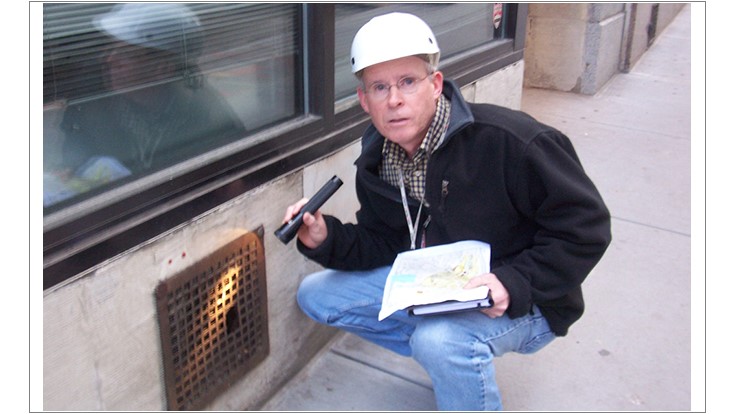
Rodents Know Your Building Better Than You Do
Commercial Pest Control Auckland | ACES Pest Control | commercialpestcontrol.net.nz
There is a moment that every business owner dreads — spotting a rat or mouse on the premises. The instinct is often to reach for a trap from the hardware store or order something online. It seems logical. It seems cheap. And almost without exception, it fails.
Here is the uncomfortable truth: by the time you see that first rodent, the problem is almost certainly far more advanced than you realise. According to world-renowned Rodentologist Dr. Bobby Corrigan — who has spent decades studying urban rat and mouse behaviour from New York City to cities around the globe — rodents have already mapped out your building long before you call for help. Using memory, pheromone trails, and environmental cues like heat, water, and food sources, they have built a detailed internal blueprint of your premises. They know every warm corner, every gap behind a cabinet, every pipe run and wall void. They know your building better than you do.
A note on why this matters to us personally: Owen Stobart, founder of ACES Pest Control, completed Dr. Corrigan's NYC Rodent Academy in 2016 — one of the most rigorous rodent management training programmes available anywhere in the world. The science in this blog is not something we read about online. It is knowledge we were trained in directly by the world's leading authority on urban rodents, and it shapes every commercial rodent programme we deliver in Auckland.
The Secretive Rodent World — And Why DIY Misses It
Rats and mice are prey animals. Their survival depends entirely on being secretive, cautious, and systematic. Every surface they travel repeatedly leaves a trace — greasy sebum marks along skirting boards, pheromone highways through wall cavities, defecation clusters that researchers call community bulletin boards where rodents communicate with others in the colony.
Dr. Corrigan's research highlights a critical concept that most business owners never consider: rodent EADU — Equipment Aversion, Disregard and Unawareness. Studies published in the Journal of Veterinary Medical Science confirm that wild Norway rats within established colonies develop a total disregard for anything unfamiliar in their foraging range, particularly when their food, water, and shelter needs are all being met. In plain terms: if your bait station or trap is not positioned exactly where rodents are already actively travelling and feeding, they will walk past it night after night without a second thought. The trap sits. The infestation grows. The DIY solution fails.
Bio-Spotting: The Science That Separates Professionals from Guesswork
This is where professional pest control delivers something no hardware store product ever can. Trained technicians use a methodology called bio-spotting — placing equipment in the precise locations where rodents are repeatedly active and dependent upon, because those spots offer the rodent a survival benefit. It is not guesswork. It is a systematic reading of the environment.
A thorough site inspection identifies rodent activity across twelve key indicators:
- Shadow zones and low-light areas where rodents feel safe to move
- Warmth-generating zones such as refrigeration units, electrical panels, and hot water systems
- Corners and wall junctions that rodents instinctively run along
- Structural voids — cabinet bases, wall cavities, floor spaces, and utility chases
- Squeeze points and low-lying gaps rodents compress through
- Sebum trails and grease marks left by repeated movement along surfaces
- Rat defecation clusters — social signalling zones for the colony
- Mouse urine concentrations revealed under UV black light
- Linear connectors such as pipes and cables used as travel highways
- Cave-shaped dense shrubs and ground cover vegetation adjacent to the building
- Refuse storage areas and food waste zones that sustain colonies
- Areas of confirmed rodent presence versus areas of zero activity
Critically, experienced technicians also know where not to place equipment. Bait stations placed along fully exposed linear wall sections, for example, are largely ineffective — rodents avoid open runs. Precise spot placement is what defines a pest professional from the hardware store homeowner.
The Food Source Problem — And Why Bait Alone Will Not Work
One of the most powerful insights from Dr. Corrigan's research is deceptively simple: remove, exclude, or spoil the established food source. This is not just good advice — it is label law. Any baiting programme purchased from a professional pest controller is directly dependent on the removal of competing food sources for rodents. If a rat colony has easy access to food scraps in a refuse alcove or an unsecured bin store, a bait station placed nearby will produce limited results. The rats already have everything they need. They have no reason to investigate something new.
This is why exclusion services — sealing entry points and eliminating harbourage — represent the most cost-effective long-term investment a business can make. Treating rodents without addressing the conditions that attracted them in the first place is like mopping the floor with the tap still running.
Rat Numbers Are Rising — And Climate Change Is Making It Worse
If you have noticed more rodent activity around your Auckland premises in recent years, you are not imagining it. Research presented at the PCT Virtual Conference on Rodent Control confirms that rat populations are generally increasing in urban environments globally. Climate change is a significant driver — milder winters, increased rainfall, and urban heat island effects all create conditions that extend rodent breeding seasons and expand their range.
The disease implications are serious and a warning for what unmanaged infestations can lead to. In the United States, international headlines have documented leptospirosis outbreaks spread by rat urine — in New York City alone, cases reached a 24-year high in 2023. In the USA, hantavirus exposure has also been linked to workplaces with frequent rodent sightings, with potentially fatal consequences. While hantavirus is not present in New Zealand, leptospirosis absolutely is — and rodents remain a documented transmission risk here. These are not abstract concerns. They are the real-world consequence of unmanaged rodent infestations, and the liability implications for Auckland businesses — particularly in food service, healthcare, and warehousing — are very real.
What This Means for Your Auckland Business
A visible rodent on your premises is not just an inconvenience — it is a compliance risk, a reputational threat, and a health hazard. For restaurants, food manufacturers, warehouses, retail centres, and body corporates, the cost of getting rodent control wrong far exceeds the cost of getting it right.
Professional pest control is not simply about laying more traps than a homeowner would. It is about reading the biology of the site, understanding rodent behaviour at a scientific level, placing equipment where the evidence demands, and using the latest science to maximise results while minimising risk. As Dr. Corrigan puts it, pest professionals are paid not just for the amount of equipment used, but for the expertise that guides how it is used — delivering the most effective and safest solution to the client's rodent problem as quickly as possible.
At ACES Pest Control, our commercial rodent programmes are built on exactly this foundation — science-based assessment, precise bio-spot placement, food source management, and ongoing monitoring tailored to your site. If your Auckland business needs a rodent programme that goes beyond blind casting and hoping, get in touch with our team today 09 302 1984.